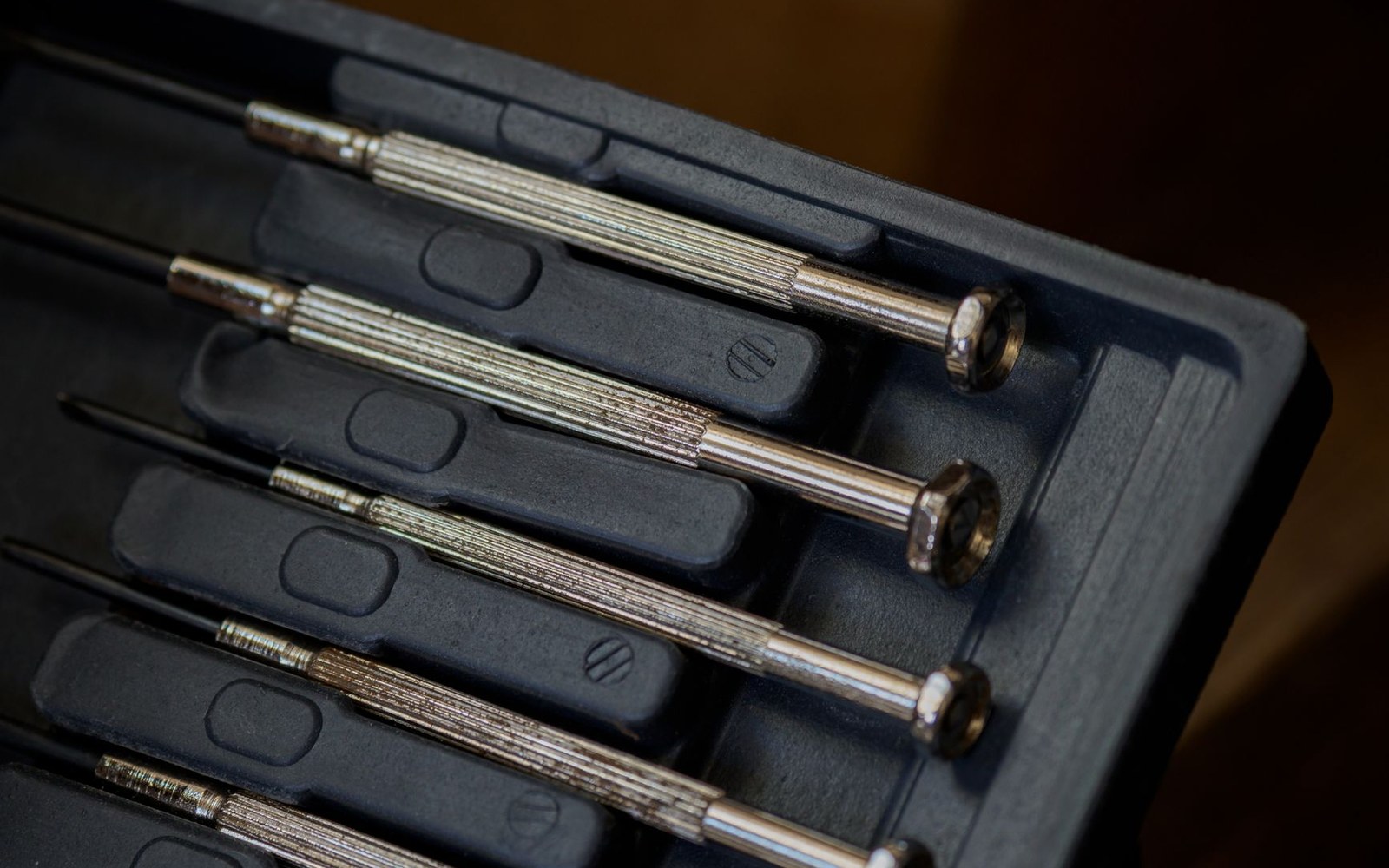
 Photo: Brett Jordan / Pexels
Tight Enough: Reassembling Without a Torque Wrench
Getting fasteners right by feel
Most household repairs don't need a torque wrench. What they need is a calibrated hand — one that knows the difference between snug, clamped and stripped, and knows that the threshold shifts depending on what the screw is threading into.
Start with the material. Steel into steel has the widest margin: the thread is strong, the boss doesn't deform easily, and you'll feel significant resistance build before anything yields. Aluminium is narrower — the metal is softer, threads strip with less warning, and overtightening a steel screw into an aluminium boss is a common and expensive mistake. Plastic is the most demanding. The thread in a plastic boss crushes rather than strips; the feedback is a brief, spongy plateau of resistance, then sudden freedom as the boss gives way. That freedom feels like full tightness. It isn't. Once a plastic boss strips, the only fix is a larger screw, an insert, or a new part.
Snug means the fastener has drawn the joint closed and resistance is rising. Clamped means a quarter to a half turn beyond snug — the joint is under real load. For steel into steel, clamped is usually where you want to be. For plastic, snug is often enough. For aluminium, snug-plus-a-whisker, no more.
Appliance casings are almost always plastic bosses with self-tapping screws. Tighten until the casing seats flush and the screw stops travelling easily — then stop. The instinct to add one more turn is where most stripped bosses happen. If a screw that was previously secure now spins freely on reassembly, the boss is already gone.
Circuit boards and PCB standoffs are the opposite problem: undertightening leaves components vibrating loose. Nylon standoffs tighten to hand-firm only — any tool leverage risks cracking the board. Metal standoffs want finger-tight plus a controlled quarter turn with a screwdriver.
For bike components, where the stakes are higher, the rule is simple: if the part involves steering or braking, borrow or hire a torque wrench rather than rely on feel. A stem faceplate bolt at 5 Nm feels almost identical to 3 Nm to an uncalibrated hand, and the difference matters.
One useful calibration habit: before you disassemble something, notice the torque of the last screw you undo. Most manufacturers tighten to sensible values; that resistance is your reference for reassembly. It sounds obvious. Few people do it.
The hand gets better with practice — but only if the practice includes noticing what happened after the fact. A loose panel a week later is information. So is a cracked boss. Both are free calibration.